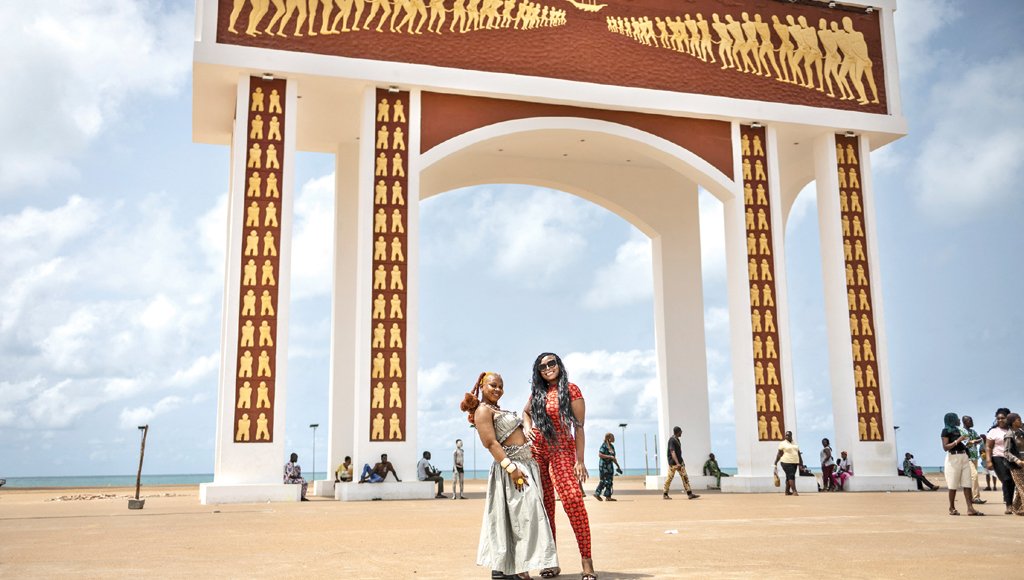
Visitors gathered beneath the iconic Door of No Return — a symbolic arch on the beach in Ouidah — built to honor the memory of enslaved Africans forced onto ships bound for the New World.
In recent years, Benin has begun embracing this painful chapter of its history as a way to promote cultural tourism. Once a major departure point during the transatlantic slave trade, Ouidah now sits at the center of efforts to reclaim and showcase the nation’s heritage.
Rising nearly 17 meters along the coast, the restored Door of No Return has become a major attraction. Its ochre-and-gold structure features carvings of chained figures, capturing the haunting journey toward the sea.
Close by, a full-scale replica of L’Aurore — one of the last ships to sail from Ouidah to Cuba around 1860 — is being developed into an immersive museum that will bring the history of the slave trade to life.
“This reminds us of where we come from,” said Arsene Ahounou, an engineer from Cotonou visiting the site. “Our history is rich and not widely known, so it’s important to build tourism around it and share it with the world.”
For many visitors, the experience is both emotional and empowering. Onyinye Anumba, visiting with friends from Nigeria, described the moment as inspiring. “I’ve read so much about this place, but being here in person makes me proud of Africa,” she said.
Beyond its slave trade history, Ouidah also offers insight into the spiritual traditions of the region. Tourists visit the centuries-old Python Temple to learn about Vodun — often referred to as Voodoo — an indigenous religion deeply rooted in local culture. Visitors often pose with pythons while guides explain their spiritual significance.
Modeste Zinsou, a veteran guide at the temple, emphasized that the country is focusing on meaningful, experience-driven tourism. “This is not mass tourism; it’s cultural tourism,” he explained. “We are reclaiming our history and helping people better understand Vodun, free from misconceptions.”
As the birthplace of Vodun, Benin now hosts Vodun Days, an annual event featuring traditional dances, mask performances, and spiritual ceremonies. The festival has grown rapidly, attracting around two million visitors this year, many of them locals rediscovering their heritage.
To support this tourism push, the government is investing in infrastructure, including improved roads and hotel developments, alongside plans for a Club Med resort by 2027. Visa policies have also been relaxed to encourage international travel.
According to heritage adviser Alain Godonou, the country is turning to culture as a key economic driver. “Benin may not have vast mineral wealth, but it holds a powerful historical and cultural legacy,” he said, adding that tourism could contribute up to 15% of GDP in the coming years.
This vision was championed by outgoing president Patrice Talon, with his likely successor, Romuald Wadagni, pledging to continue the momentum.
In a landmark move since 2024, Benin has also opened citizenship to descendants of enslaved Africans in the diaspora, acknowledging historical injustices and reconnecting lost heritage.
Meanwhile, in Cotonou, the striking Amazon Monument has become a symbol of national pride. The 30-meter statue honors the female warriors of the Dahomey Kingdom and draws large crowds.
“It’s something we are proud of,” said local vendor Geraldine Sedami Yagbo. “Not everyone can travel abroad, but this — this is our own Eiffel Tower.”
About the Author