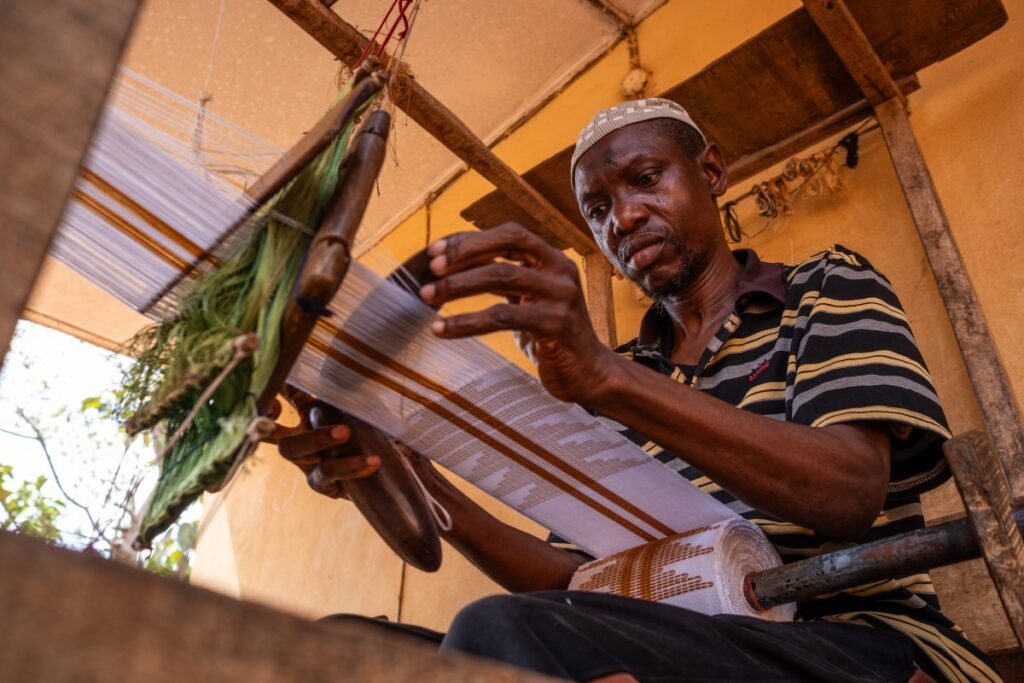
Lukman Oladejo weaves aso-oke, a handwoven fabric indigenous to the Yoruba ethnic group, using the traditional loom at Ajumose weaving workshop Oke Oja in Iseyin on March 17, 2026. Demand for the aso-oke fabric has recently soared at home and abroad, boosted by Nigerians in the diaspora and the rising global popularity of the country's fashion and music culture. Yet the artisans making it are resisting mechanisation, insisting that handweaving is what makes it unique. (Photo by TOYIN ADEDOKUN / AFP)
In Iseyin, a quiet town in southwestern Nigeria, shaded corners and narrow alleys have transformed into vibrant centers for weaving aso-oke, a traditional Yoruba fabric.
Carefully handcrafted, this thick and often vividly colored textile carries deep cultural meaning, symbolizing heritage, identity, and status.
Today, demand for aso-oke is growing rapidly both locally and internationally. This surge is fueled by the Nigerian diaspora and the rising global influence of Nigerian fashion and music. Once associated mainly with elites and special occasions, aso-oke is now widely embraced for ceremonies, daily wear, and modern fashion statements.
Artisans in Iseyin stress that hand-weaving remains central to maintaining the fabric’s authenticity and quality, even as production scales up. The renewed interest is also creating employment opportunities, particularly for younger people, helping sustain the craft across generations.
Fashion designers note that aso-oke’s increasing presence on global runways in cities like London and Paris is elevating its status as an internationally recognized textile. However, its global expansion has also sparked conversations around cultural ownership and the importance of protecting its origins.
Even amid these discussions, aso-oke continues to evolve — blending tradition with contemporary fashion while gaining recognition on the world stage.
About the Author